

Traditional Gua Sha: Benefits, Scientific Research and Professional Practice
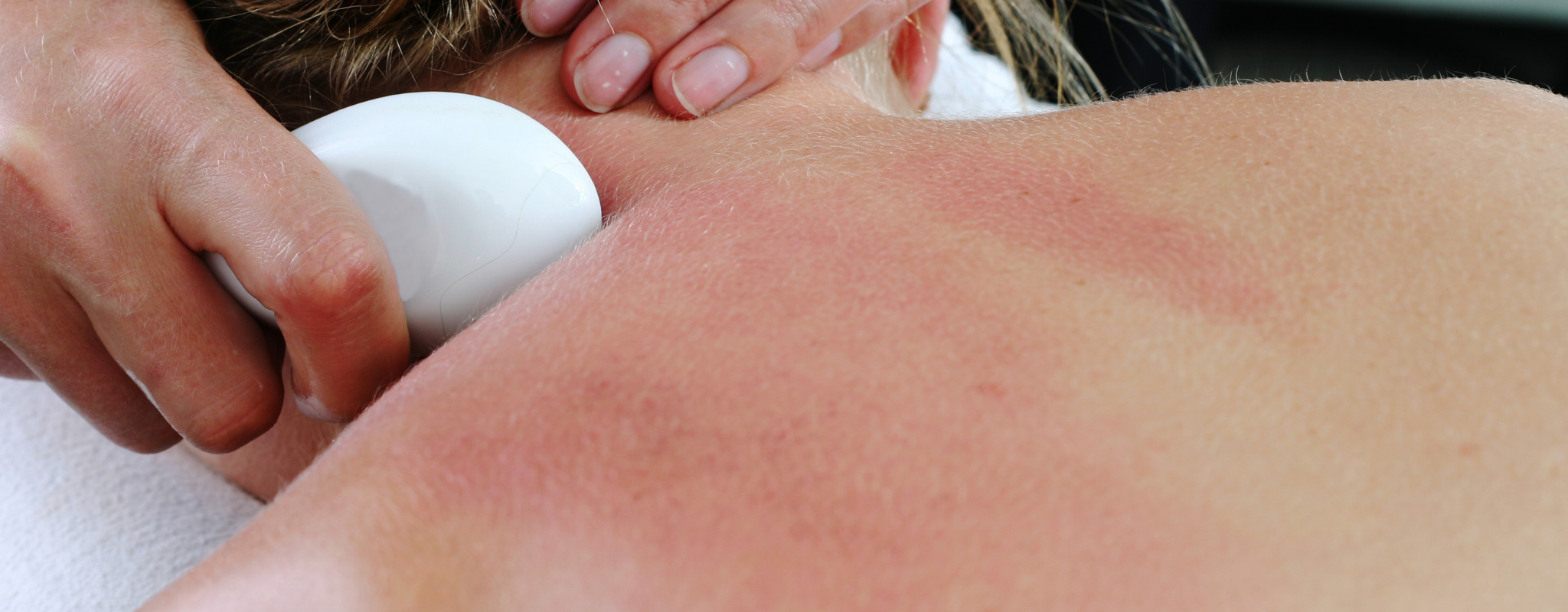
Gua Sha is a traditional East Asian therapeutic technique that has been practised for centuries.
While it has recently gained considerable attention through cosmetic facial treatments, traditional body Gua Sha has a much broader history, particularly in the management of muscular discomfort and other conditions described within traditional Chinese medicine.
Modern scientific research is beginning to investigate how Gua Sha affects the body, from changes in local circulation and pain perception to its potential influence on cellular processes involved in tissue repair, but what does the research actually tell us? Can Gua Sha improve circulation, relieve musculoskeletal pain or even stimulate stem cells?
In this article, we examine the published scientific evidence, explore the possible physiological mechanisms behind Gua Sha and consider what these findings mean for practitioners and patients.
What is traditional Gua Sha?
Gua Sha is a technique in which a practitioner uses a smooth-edged instrument to apply repeated, controlled strokes to the surface of the skin. A suitable lubricant is normally applied to reduce friction.
In traditional Chinese medicine, Gua Sha is commonly used to address patterns associated with stagnation and restricted movement of Qi and Blood. Treatments may focus on areas of muscular tension, discomfort or restricted movement.
Traditional body Gua Sha frequently produces temporary red or purple markings known as sha. These result from small amounts of blood escaping from superficial capillaries into the surrounding tissues, producing petechiae and sometimes ecchymosis.
The appearance of sha varies between individuals and treatment areas, although it is a recognised response to traditional Gua Sha, the darkness or extent of the markings should not be treated as a complete stand-alone measurement of therapeutic effectiveness.
Unlike the gentler (Yin) techniques commonly used for facial beauty treatments, traditional therapeutic Gua Sha often involves firmer pressure and usually deliberately produces sha, research investigating traditional body Gua Sha should therefore not automatically be applied to cosmetic facial treatments.
How does Gua Sha affect circulation?
One of the most frequently discussed physiological effects of Gua Sha is its influence on local microcirculation. Microcirculation describes blood flow through the body’s smallest blood vessels, including capillaries. This circulation is essential for delivering oxygen and nutrients to tissues and removing metabolic waste products.
In 2007, Nielsen and colleagues published a pilot study investigating the effects of Gua Sha on microcirculation in 11 healthy volunteers. Using laser Doppler imaging, researchers measured changes in superficial blood flow before and after a single treatment applied to the back. The researchers observed an approximately fourfold increase in measured local microcirculation during the first 7.5 minutes following treatment. Microcirculation remained significantly elevated throughout the 25-minute measurement period.
Participants also reported reductions in muscular discomfort following treatment, including some improvement in areas away from the treatment site, interestingly, the researchers found that increased circulation at the treatment site did not fully explain the reported reduction in discomfort at more distant locations. This raises the possibility that additional mechanisms, such as changes in pain processing, may contribute to the treatment response.
Can Gua Sha help relieve neck and back pain?
Musculoskeletal pain is one of the principal reasons people seek traditional Gua Sha treatment. Several clinical studies have investigated its effects on chronic neck and lower back pain.
In 2011, Braun and colleagues published a randomised controlled trial involving 48 patients with chronic neck pain.
Participants received either a single Gua Sha treatment or treatment using a heat pad. Researchers assessed pain intensity, neck function and quality of life over seven days.
The Gua Sha group experienced greater short-term improvements in neck pain and several other measured outcomes than the heat-pad group.
Gua Sha for chronic lower back pain
A 2019 randomised controlled trial by Saha and colleagues investigated Gua Sha in 50 patients experiencing chronic lower back pain.
Half received two Gua Sha treatments, while the remaining participants were assigned to a waiting-list control group.
Patients receiving Gua Sha reported significantly lower pain intensity and better perceived overall health than those in the control group. However, researchers did not identify significant differences in the other measured outcomes, including functional disability and sensory measurements.
The results are encouraging, although the waiting-list comparison makes it difficult to determine how much of the improvement was attributable to the specific physiological effects of Gua Sha rather than other aspects of receiving treatment.
More recently, a 2025 randomised trial involving 32 participants compared Gua Sha with hot-pack therapy for chronic nonspecific lower back pain. Both groups demonstrated improvements in several clinical measures, including pain and lumbar flexibility.
How is scientific understanding of Gua Sha changing?
Individual clinical trials can produce encouraging results, but systematic reviews are useful for examining the overall quality and consistency of the available evidence.
In 2010, Lee and colleagues published a systematic review examining seven controlled clinical trials investigating Gua Sha for musculoskeletal pain. Although several trials reported favourable outcomes, the researchers identified methodological limitations in the available evidence and concluded that further high-quality research was needed.
Several clinical trials have been published since that review, including the neck and back pain studies discussed above. These contribute useful additional evidence, but they do not eliminate the need for larger trials, longer follow-up periods and appropriate comparison treatments.
For practitioners, this distinction matters. A treatment may have promising preliminary evidence without its effectiveness having been conclusively established.
Does Gua Sha stimulate stem cells and tissue regeneration?
One of the most interesting developments in Gua Sha research is the investigation of its potential influence on the body’s natural processes of tissue repair and regeneration.
Stem cells are essential to tissue maintenance and repair. Skeletal muscle, for example, contains specialised stem cells known as satellite cells. Following injury, these cells can become activated, multiply and contribute to the regeneration of damaged muscle fibres.
Researchers are now exploring how the mechanical stimulation produced by Gua Sha and related scraping techniques may influence these processes.
Research into Gua Sha and muscle regeneration
A 2023 animal study by Zou and colleagues investigated the effects of scraping therapy on injured lumbar multifidus muscles in 54 rats.
The researchers observed improvements in muscle regeneration and identified changes in cellular signalling pathways associated with energy metabolism and protein synthesis, including the GLUT4/glycolytic and AMPK/mTOR/4EBP1 pathways.
These findings are particularly interesting because these pathways are involved in the biological processes that support muscle repair. The researchers proposed that scraping therapy may influence muscle satellite-cell activity and contribute to the regeneration of damaged muscle tissue.
This research offers a fascinating insight into the potential cellular mechanisms behind Gua Sha and opens up new possibilities for investigating its role in musculoskeletal treatment.
As this was an animal study, further research is needed to determine whether similar regenerative effects occur in humans.
Scraping Techniques and Stem-Cell Mobilisation
Related research has investigated instrument-assisted soft-tissue mobilisation (IASTM), which shares certain mechanical characteristics with Gua Sha.
In a 2021 animal study, Loghmani and colleagues investigated the effects of IASTM on pain, inflammation, movement and circulating mesenchymal stem cells.
The researchers reported improvements in certain measures of pain, inflammation and movement. Although changes in circulating stem-cell levels were observed, these were not statistically significant.
This research highlights the growing scientific interest in how mechanical stimulation may influence the body’s responses to injury and the processes involved in tissue repair.
While it has not yet been established that Gua Sha increases stem-cell production in humans, research into its potential influence on tissue regeneration is an interesting area for future investigation.
What causes the red marks following Gua Sha?
One of the most recognisable characteristics of traditional Gua Sha is the temporary red or purple marking that may appear during treatment.
These markings are caused by superficial capillary changes and the escape of small amounts of blood into surrounding tissues. The resulting petechiae and ecchymosis are commonly referred to as sha.
The marks usually fade over several days, although their appearance and duration can vary between individuals.
Within traditional Chinese medicine, the appearance of sha may be interpreted in relation to patterns of stagnation. However, the colour and intensity of the markings have not been scientifically validated as diagnostic indicators of particular internal conditions.
It is also important to recognise that producing more extensive markings does not necessarily mean that a treatment has been more effective.
Treatment pressure should be appropriate to the individual, their clinical presentation and the intended treatment outcome.
Gua Sha safety and clinical considerations
Traditional Gua Sha is generally considered a relatively low-risk treatment when performed appropriately, although it is not suitable for every patient.
Temporary redness, tenderness and bruising are expected treatment responses. More significant adverse effects, including skin injury and infection, are possible, particularly when appropriate hygiene procedures and clinical precautions are not followed.
A 2012 paper by Nielsen, Kligler and Koll examined safety protocols for Gua Sha and cupping, highlighting the importance of infection prevention and appropriate instrument hygiene.
Practitioners should consider several important precautions:
- Avoid treating directly over broken skin, active infections, sunburn or significant skin irritation.
- Assess patients with bleeding disorders, those taking anticoagulant medication and those who bruise unusually easily before considering treatment.
- Use appropriate infection-control procedures, including suitable cleaning and disinfection of reusable instruments.
- Obtain informed consent, explaining the expected appearance and duration of sha before treatment.
- Adapt treatment pressure and technique to the patient’s individual needs, medical history and clinical presentation.
Patients taking anticoagulants require an individual assessment rather than an automatic assumption that treatment is either safe or contraindicated. Where necessary, practitioners should seek appropriate medical advice.
Practitioners should also recognise that Gua Sha is not a substitute for medical investigation when patients present with unexplained, persistent or worsening symptoms.
Why professional Gua Sha Training Matters
Gua Sha may appear to be a relatively straightforward technique, but effective professional treatment requires considerably more than simply applying a scraping instrument to the skin.
Understanding anatomy, treatment pressure, stroke direction and appropriate treatment areas enables practitioners to adapt their techniques to individual patients and their presenting conditions.
Professional training also provides the knowledge needed to recognise contraindications, understand expected treatment responses and apply appropriate hygiene and infection-control procedures.
For therapists who already practise massage, acupuncture or other complementary therapies, Gua Sha can be a valuable addition to their existing skills. Understanding both its traditional principles and the developing scientific evidence allows practitioners to incorporate the technique thoughtfully into their treatments.
Total Therapy Training offers Traditional Gua Sha training for practitioners wishing to develop their knowledge and practical skills in this established therapeutic technique.
What about facial Gua Sha?
Although traditional body Gua Sha and cosmetic facial Gua Sha share a name and some similarities in technique, their treatment objectives and application can differ considerably.
Facial Gua Sha generally involves gentler pressure and is commonly promoted for cosmetic purposes, such as temporarily reducing puffiness or improving the appearance of the skin.
Traditional body Gua Sha, by contrast, is commonly used in the management of muscular discomfort and may intentionally produce sha.
Research demonstrating changes in microcirculation or short-term improvements in musculoskeletal pain following traditional body Gua Sha cannot automatically be used to support claims about facial rejuvenation, collagen production or anti-ageing effects, these claims require separate investigation using appropriate studies.
The future of Gua Sha research
Research into Gua Sha has progressed from investigating immediate physiological changes to examining clinical outcomes and possible cellular mechanisms.
Studies have identified temporary increases in superficial microcirculation, while several clinical trials have reported improvements in musculoskeletal pain.
More recent animal research has also raised interesting questions about the potential influence of scraping therapy on muscle regeneration and cellular signalling.
However, several important questions remain unanswered.
We still need to establish which patients are most likely to benefit, how long any improvements persist, what treatment frequency is appropriate and how Gua Sha compares with other interventions.
Further human research is also required to investigate whether the regenerative responses observed in animal experiments occur during clinical treatment.
For complementary therapists, following these developments provides an opportunity to integrate traditional knowledge with an increasingly detailed understanding of human physiology.
Conclusion
Traditional Gua Sha offers an interesting example of how established therapeutic practices can be explored through modern scientific research.
Studies have demonstrated increases in local microcirculation following treatment, while clinical trials have reported encouraging results in the management of musculoskeletal pain. Emerging research into muscle regeneration and cellular signalling offers further opportunities to investigate the physiological effects of this traditional technique.
For complementary therapists, understanding the relationship between traditional principles, modern anatomy and developing scientific evidence adds another dimension to clinical practice.
Learning Gua Sha involves considerably more than mastering the use of a scraping tool. Appropriate training provides an understanding of treatment techniques, anatomical considerations, patient assessment and the safe application of Gua Sha within professional practice.
Whether you’re an established therapist looking to expand your treatment options or interested in exploring traditional Chinese therapeutic techniques, Gua Sha offers a fascinating area for professional development.
If you are interested in learning Gua Sha to develop your practical skills and understanding of this established therapeutic technique, we recommend booking Total Therapy Training’s Traditional Gua Sha course. https://totaltherapytraining.org/product/traditional-gua-sha/
Author: Michelle Bebbington – Course Co-ordinator and Assessor
References and further reading
The following references link to the original research, with PubMed or full-text links where available.
1. Nielsen, A., Knoblauch, N.T.M., Dobos, G.J., Michalsen, A. and Kaptchuk, T.J. (2007). The effect of Gua Sha treatment on the microcirculation of surface tissue: A pilot study in healthy subjects. Explore, 3(5), 456–466. https://doi.org/10.1016/j.explore.2007.06.001
2. Braun, M., et al. (2011). Effectiveness of traditional Chinese Gua Sha therapy in patients with chronic neck pain: A randomized controlled trial. Pain Medicine, 12(3), 362–369. https://doi.org/10.1111/j.1526-4637.2011.01053.x
3. Saha, F.J., et al. (2019). Gua Sha therapy for chronic low back pain: A randomized controlled trial. Complementary Therapies in Clinical Practice, 34, 64–69. https://doi.org/10.1016/j.ctcp.2018.11.002
4. Lee, M.S., Choi, T.Y., Kim, J.I. and Choi, S.M. (2010). Using Guasha to treat musculoskeletal pain: A systematic review of controlled clinical trials. Chinese Medicine, 5, 5. https://doi.org/10.1186/1749-8546-5-5
5. Zou, B., et al. (2023). Scraping therapy improved muscle regeneration through regulating GLUT4/glycolytic and AMPK/mTOR/4EBP1 pathways in rats with lumbar multifidus injury. Pain Research and Management, 2023, 8870256. https://doi.org/10.1155/2023/8870256
6. Loghmani, M.T., Tobin, C., Quigley, C. and Fennimore, A. (2021). Soft tissue manipulation may attenuate inflammation, modulate pain, and improve gait in conscious rodents with induced low back pain. Military Medicine, 186(Suppl 1), 506–514. https://doi.org/10.1093/milmed/usaa259
7. Nielsen, A., Kligler, B. and Koll, B.S. (2012). Safety protocols for Gua Sha (press-stroking) and Baguan (cupping). Complementary Therapies in Medicine, 20(5), 340–344. https://doi.org/10.1016/j.ctim.2012.05.004
8. Lauche, R., et al. (2012). Randomized controlled pilot study: Pain intensity and pressure pain thresholds in patients with neck and low back pain before and after traditional East Asian Gua Sha therapy. The American Journal of Chinese Medicine. https://pubmed.ncbi.nlm.nih.gov/22928824/
9. Wang, et al. (2025). Effects of Gua Sha therapy on thoracolumbar fascia thickness and clinical outcomes of patients with chronic nonspecific low back pain: A randomized controlled trial. Medicine. https://pubmed.ncbi.nlm.nih.gov/40922243/
Facebook
Twitter
LinkedIn
Pinterest